Designing for Different Abilities
A design exercise exploring how we could shape an familiar everyday cooking appliance into a more inclusive experience.
- Role
- Concept Designer, Team Collaborator
- Type
- Concept Sketch
- Focus
- Accessibility
Accessibility as a Starting Point
This exercise asked us to redesign a stove with accessibility as the primary focus. The central challenge was to consider how everyday cooking equipment like a stove could better accommodate a wider range of human experience.
The work moved from an individual low-fidelity concept to a collaborative combination of ideas into a group concept, followed by a live critique.
Rethinking Reach and Interaction
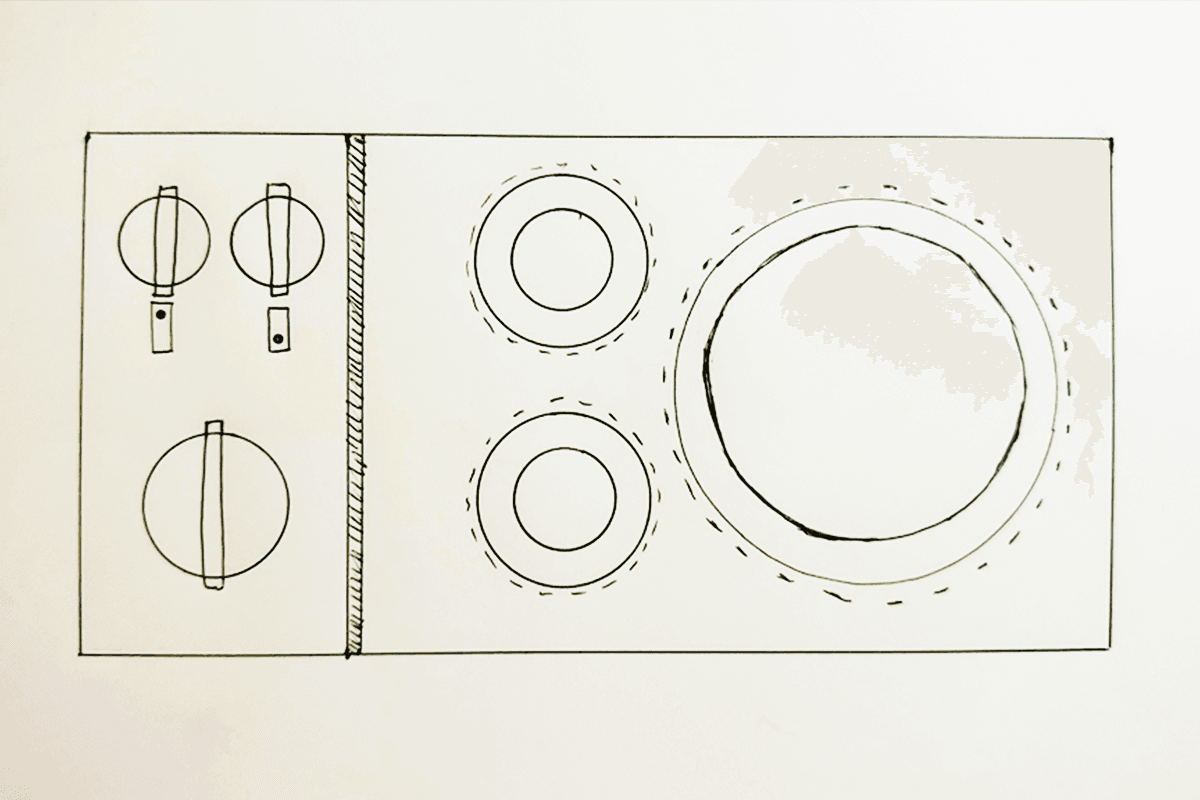
For my individual concept, I began exploring with a height-adjustable stove and large tactile dials. I considered how changes in working height might support different reach needs and working positions, and how larger tactile controls could be easier to locate and operate than small, visually dependent interfaces.
Bringing Perspectives Together
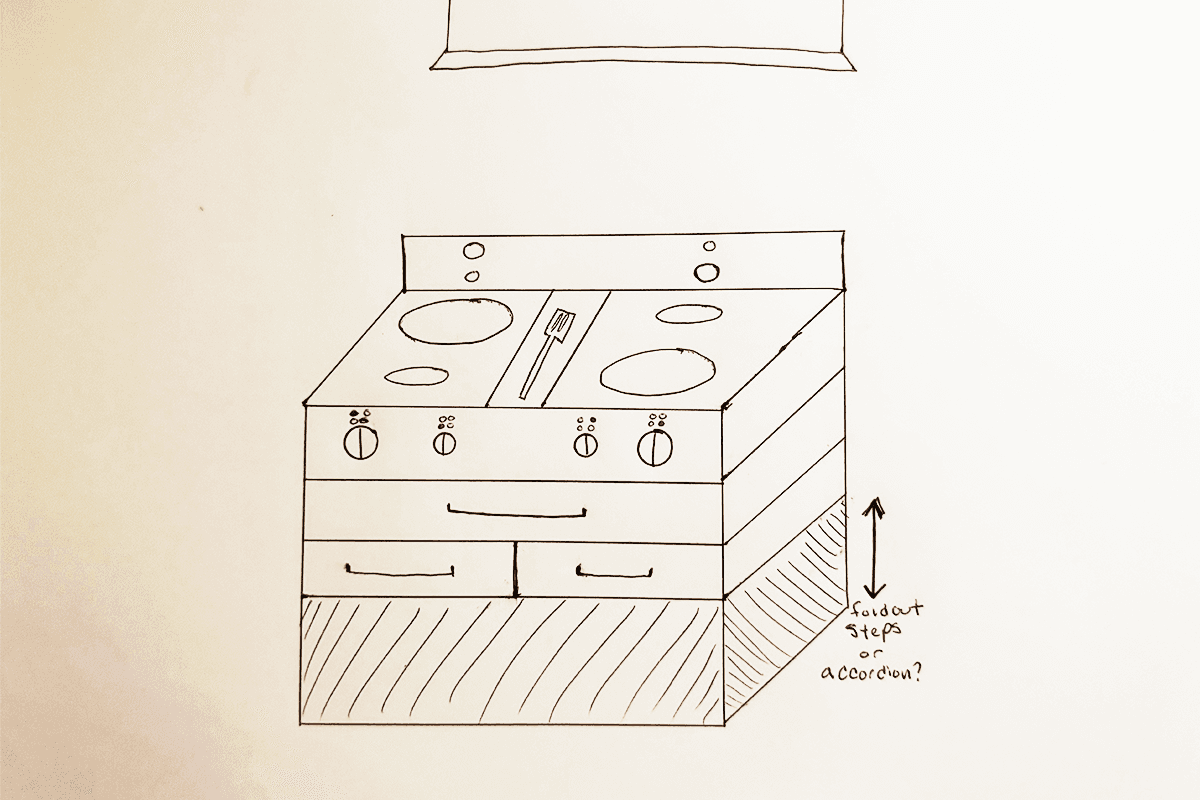
I then joined a group of 4 people to combine our ideas and consider a redesign. We explored our different initial concepts, considered how features would interact, and discussed which problems each decision was intended to address.
Our shared concept ended up as portable cooktop with controls customized to work from either side, fold-out height-adjustable legs from the bottom, and recessed cooking pot areas. The features were intended to support different mobility personas, while the portable form considered use in different environments.
Beyond the Drawing
During a live critique, we explained and defended the group concept. Questions about a portable power source, the stability of adjustable legs under cookware, and accidental activation during transport revealed practical concerns the drawing had not yet resolved.
Considering the Whole Experience
We completed this exercise after critique, but the next iteration would need to evaluate the safe and useful range of working heights, the clarity of control-to-heating-area mapping, the tradeoffs of recessed cooking surfaces, leg stability under different loads, and the power, transport, and activation-safety requirements introduced by portability.
This exercise reinforced that designing for accessibility involves more than introducing individual features, but that it must be considered in relation to the larger system. Including how people interact with it, the environments in which it is used, and the practical constraints that influence its safety and usability.