Popular Children’s Literature Comparison
An exploratory data analysis and visualization project examining how book characteristics, genres, and themes differ across Picture Books, Children’s, and Middle Grade literature.
Explore the Dashboard (opens in a new tab)- Role
- Designer and Researcher
- Type
- Interactive Dashboard
- Focus
- Data Analysis
Looking Beyond the Reader Level
This project examined whether book characteristics, genres, and central themes could offer additional ways to explore books connected to young readers’ interests and lived experiences.
The analysis compares popular books categorized as Picture Book, Children’s, and Middle Grade across a public data set.
Setting the Scope
The source was a Goodreads “Best Books Ever” dataset scraped in 2024 from user-review data and uploaded to Kaggle. The full dataset contains 52,478 book entries and 25 fields, including title, description, genre, reviews, and Goodreads Best Books score. I filtered the analysis to Picture Book, Children’s, and Middle Grade classifications.
- Reader levels were assigned from Goodreads genre classifications; books with multiple reader-level labels were grouped by their oldest listed level for consistent comparisons.
- Books without descriptions remained in the quantitative analysis but were excluded from the qualitative theme analysis.
Combining Quantitative and Qualitative Analysis
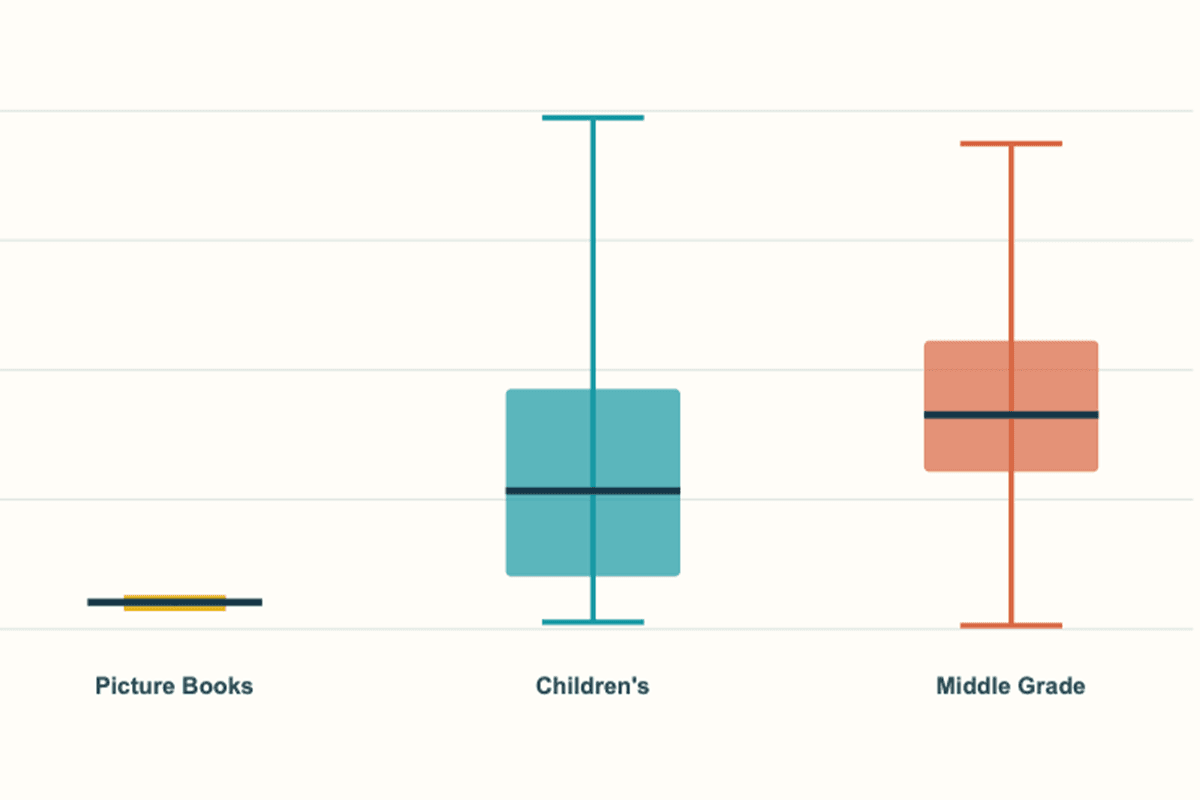
I checked the data for missing values, duplicates, and data types, then used one dataset for quantitative comparisons and another for descriptions-based theme analysis. The quantitative work compared page counts, genre distributions, and Goodreads “liked percentage” by reader level.
For the qualitative work, I reviewed book descriptions, gathered keywords, and manually organized them into four recurring themes: Friendship and Connection, School and Growing Up, Family and Heritage, and Adventure and Other Worlds. Each entry was coded for the presence or absence of those themes.
Making the Analysis Explorable
I translated the data exploration into an interactive dashboard with views for page counts, genre distribution, themes, and theme co-occurrence. The visualizations support comparison across reader levels while keeping the dataset’s limitations visible.
My findings suggest that themes may be a useful search attribute in addition to page length and genre.
Reflection
This analysis showed themes that may be useful for searching for books beyond reader level. My proposed a/b testing approach may offer adults additional ways to explore books that connect more accurately with a child’s lived experiences.